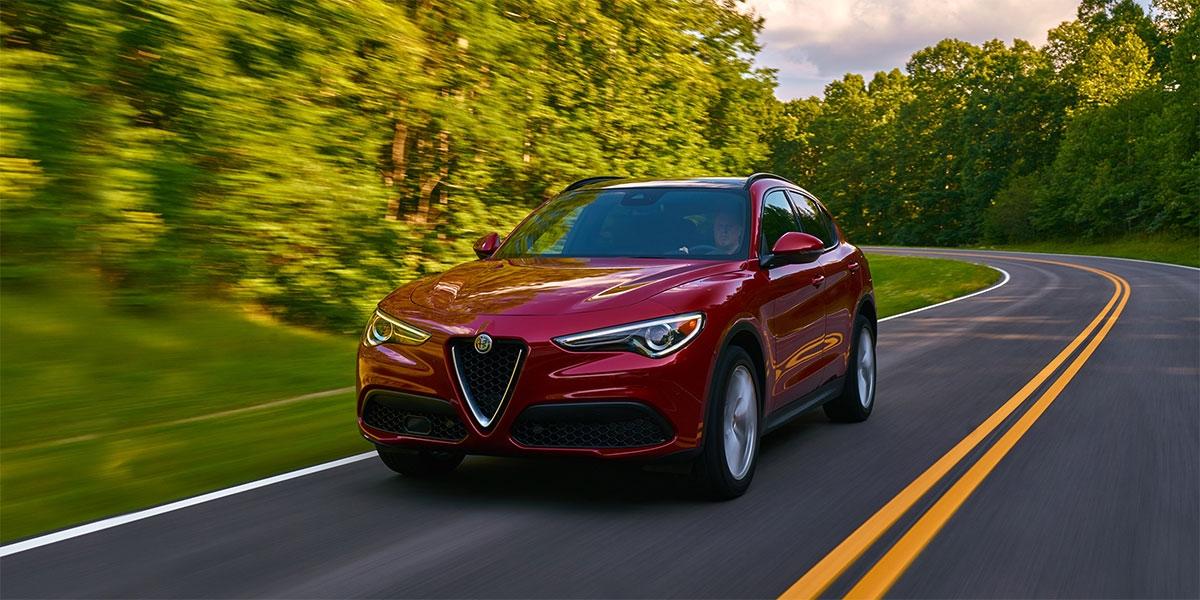



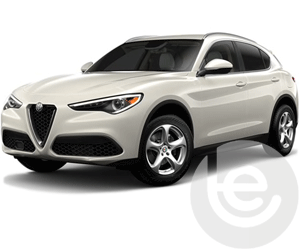





More about towing with an Alfa Romeo Stelvio
The Q4 all-wheel drive technology combines maximum control and superior performance with an ideal real-time distribution of the front and rear axles. The technology responds to the rear road conditions and commands the driver to provide the most comfortable drive.
DNA technology in the Alfa Romeo compromises of Dynamic Mode, sporty mapping in the engine and gearbox, added traction in curves and increased sensitivity to the accelerator pedal. Natural Mode, standard engine and gearbox response make a more comfortable suspension setup. Advanced Efficiency for occasions when you prize Efficiency over performance.
The all-aluminium Alfa Link Suspension System ensures excellent dynamic driving behaviour and unique handling. The front suspension features a double-wishbone system with a semi-virtual steering axis, keeping wheels perpendicular to the road, even on the most intense corners. The rear suspension, a Multilink system with four and a half links, guarantees the best of both worlds between lateral grip and comfort on uneven surfaces.
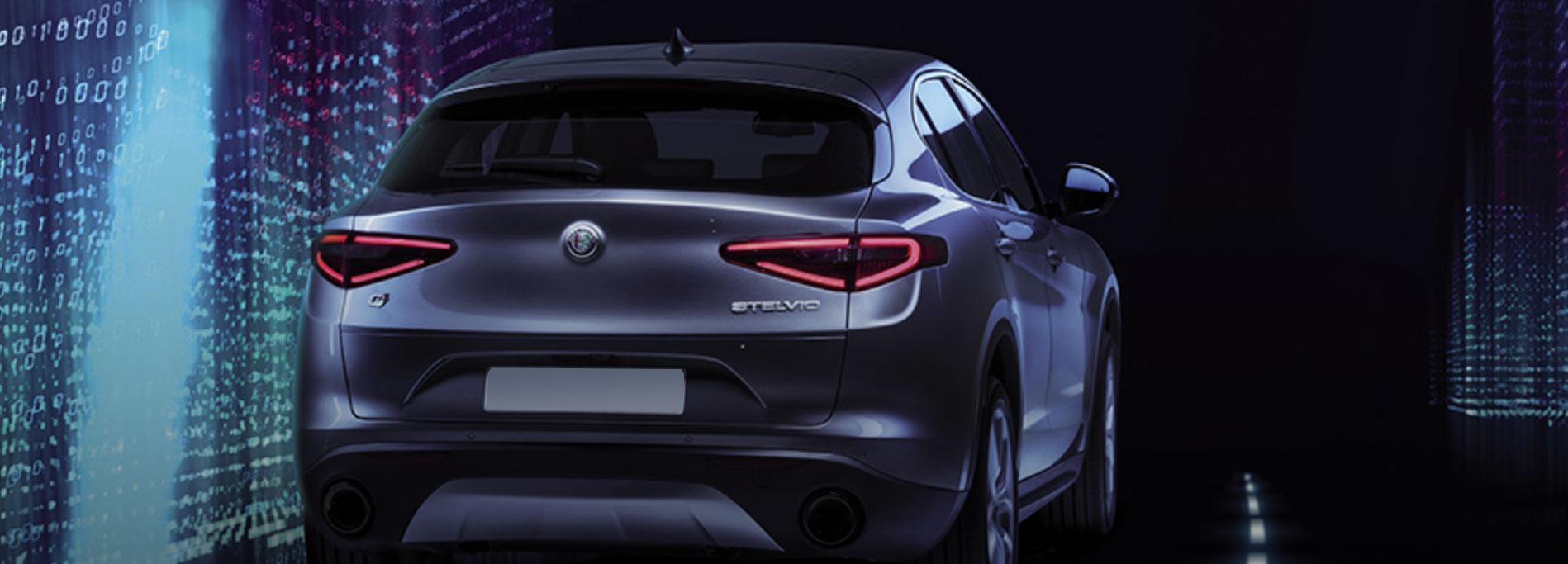
The Alfa Romeo Stelvio allows the driver to enjoy the journey rather than concentrate on the details; equipped with some of the most sought-after technology, the Stelvio provides comfort and thrill. Some of the technology in the Stelvio are Traffic Jam and Highway Assist, Active Blind Spot Assist, Lane Keeping Assist, Active Cruise Control, Traffic Sign Recognition and Driver Attention Assist.
What's my Towing Capacity?
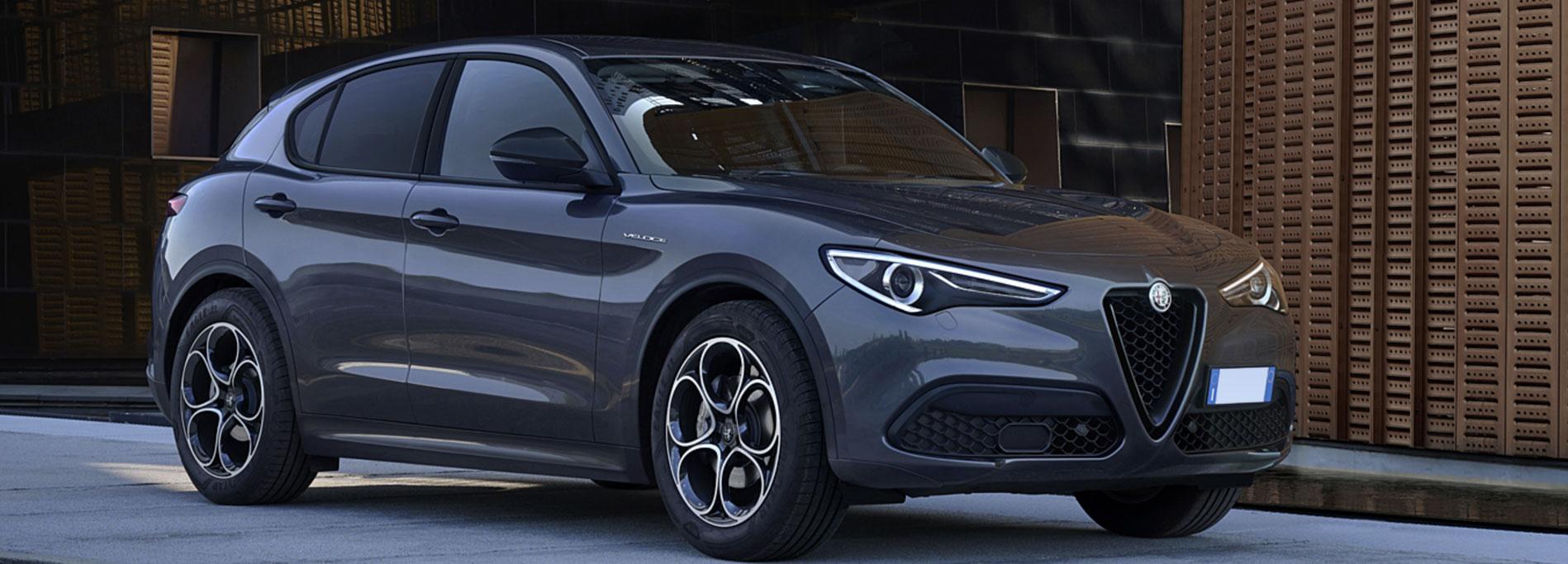
The towing capacity of an Alfa Romeo Stelvio is between 1600KG to 2,300KG. This capacity is perfect for towing anything from a small trailer to a medium-sized caravan. To receive an accurate towing capacity for your Stelvio, please refer to the VIN plate located either on the passenger door sill or underneath the vehicle's bonnet.
Which Towbar is best for my Stelvio?
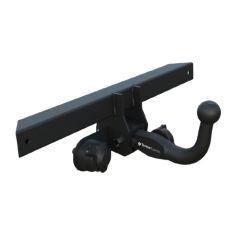
Three types of towbars are available for the Alfa Romeo Stelvio: the fixed swan neck towbar, the fixed flange style towbar and a detachable swan neck towbar.
The fixed swan neck towbar is a permanent towbar; the thin design allows the towbar to sit comfortably on the chassis providing the ultimate clearance between the towbar and the rear parking sensors. The fixed swan neck towbar is compatible with all clamp-on cycle carriers, trailers, and caravans. The fixed swan neck towbar is also ALKO compatible, meaning it can be used with all ALKO stabilisers without needing an ALKO towball.
The fixed flange towbar is another permanent towbar; however, the fixed flange towbar is a lot chunkier. Due to the style of the fixed flange towbar, it can cause a disturbance with parking sensors making the sensors trigger when in reverse even if the towbar isn't connected to anything. The fixed flange towbar is compatible with all styles of cycle carriers, trailers, and caravans. However, if towing anything with an ALKO stabiliser, an ALKO towball with the need to be purchased before towing.
The Detachable swan neck is the only removable style of towbar; using a twist and lock method, the towbar neck can easily be detached from the housing, leaving the towbar practically invisible. The detachable swan neck towbar is compatible with all styles of cycle carriers, trailers and caravans. The detachable swan neck is ALKO compatible, meaning it can be used with all ALKO stabilisers without needing an ALKO towball.
Will it need a bumper cut?
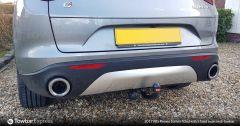
When fitting any of the three towbars to the Alfa Romeo Stelvio, a non-visible bumper cut will be made to the vehicle's undertray. This cut will only be visible if looking underneath the vehicle at the undertray. This cut is on the Stelvios with a standard bumper; a larger cut may be required if the vehicle has been modified.
How do I book a Towbar Fitment?
We know our customers lead busy lives, which is why our Engineers will come to your home or your place of work. You can choose whether you want your appointment to be in the morning between 8 am and 12 pm or in the afternoon between 12 pm and 6 pm. Our team will fit your Towbar at a time that’s convenient to you. Our towbar fitting service can take as little as one hour and up to four hours, depending on your vehicle.
To get a quote, all you need to do is search for your vehicle below or enter your registration number and postcode above. You can book your date, time, and location online, and we will take care of the rest. We will bring everything needed to complete the job in one appointment. If you order any Cycle Carriers or accessories with your Towbar, the Engineer will also bring those to the appointment.
Why choose Towbar Express?
Towbar Express have over 30 years of experience in the industry, and we know exactly what you need! We employ all our Towbar Engineers, so we won’t just contract out the work to a 3rd party company. They are all trained to a high standard, and training is carried on throughout their employment with us to ensure they understand every aspect of every vehicle. New vehicles are released every year, and our Engineers are trained, and their knowledge is updated constantly.
We have over 5000 Trustpilot and google reviews from past customers who are happy with our work! Every day another 5-star review comes through, which is how we know we have happy customers and are doing a fantastic job!