

24 September 2026
What Is the Most Robust Towbar Type for Commercial Vehicle Use?
Commercial vehicles often work harder than ordinary passenger cars. They may tow heavy trailers regularly, operate on construction sites or carry specialist equipment, so the towbar must be practical, durable and suitable for repeated use.
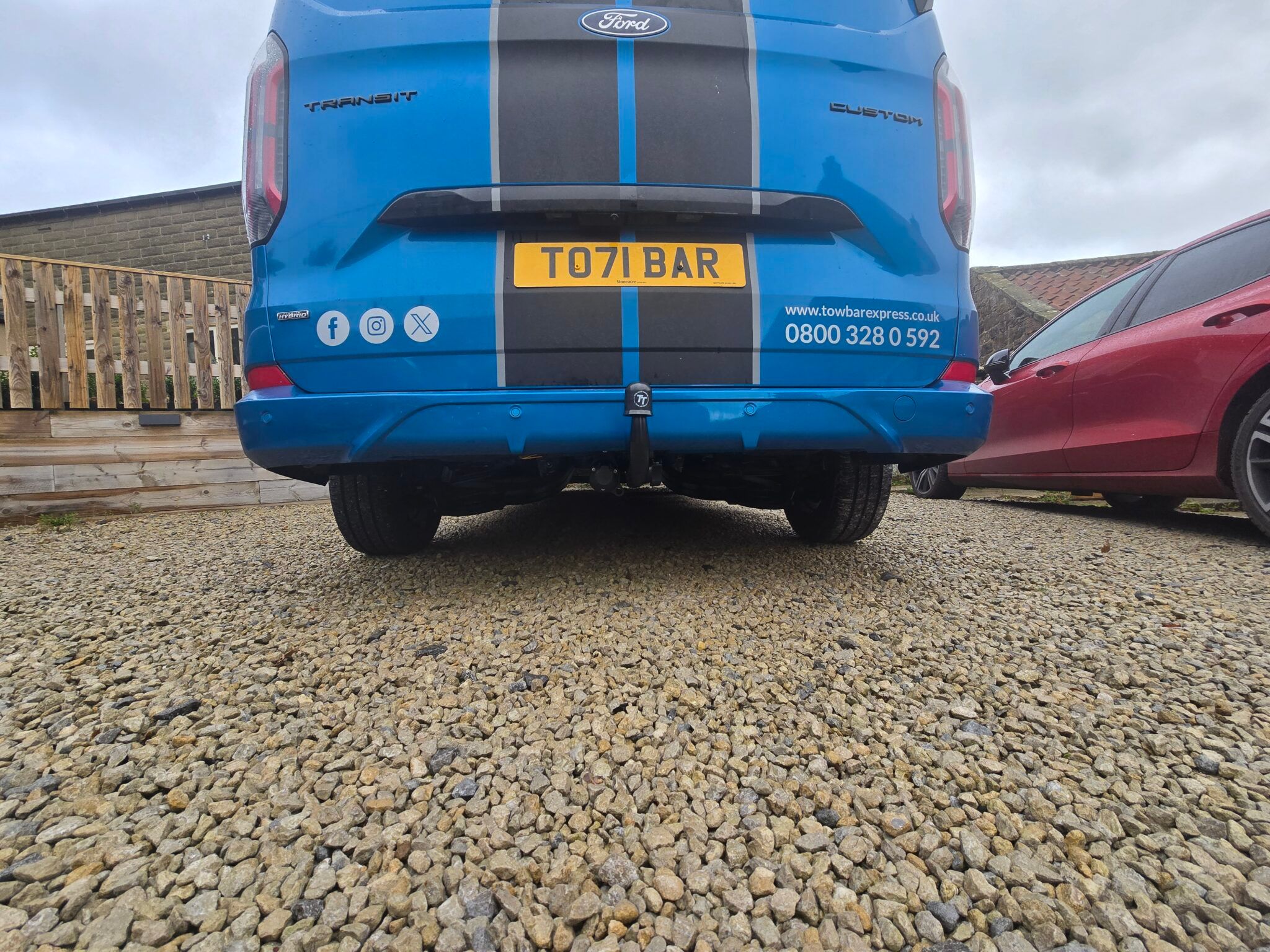
For most vans, pickups and chassis-cab vehicles, a fixed flange towbar is usually the most robust and versatile option. It has a simple permanent design and can support a wide range of commercial towing couplings and accessories where approved.
However, a fixed flange towbar is not automatically stronger than every other towbar. The actual capability depends on its approved towing load, D-value and maximum vertical load, together with the limits set by the vehicle manufacturer.
Why is a fixed flange towbar recommended for commercial use?
A fixed flange towbar uses a towball or coupling bolted to a visible faceplate. Unlike a detachable towbar, there is no removable neck mechanism that must be fitted before each towing job.
The straightforward design makes it particularly suitable for vehicles that tow frequently or work in demanding environments.
Benefits of a fixed flange towbar include:
- Permanent and always ready to use
- Simple, durable construction
- Very little routine maintenance
- Suitable for frequent commercial towing
- Compatible with a wide range of approved couplings
- Can accommodate certain steps, guards and accessory plates
- Suitable for many vans, pickups and chassis-cab vehicles
- Often more cost-effective than a detachable system
Does a fixed flange towbar have a higher towing capacity?
Not necessarily. A fixed flange, fixed swan neck and detachable towbar can all be capable of reaching the vehicle’s full approved towing capacity when correctly designed for that vehicle.
The reason a fixed flange is often considered the most robust commercial option is its simple construction, permanent availability and compatibility with commercial accessories—not because every flange towbar has a higher weight rating.
The maximum permitted towing weight is always determined by the lowest applicable limit among:
- The vehicle manufacturer’s towing capacity
- The vehicle’s maximum train weight
- The towbar’s approved towing load
- The fitted towing coupling
- The trailer’s maximum authorised mass
- The driver’s licence entitlement
Understanding a towbar’s commercial weight ratings
Two towbars that look similar may have different technical ratings. Before choosing a commercial towbar, check the manufacturer’s specifications carefully.
Important figures include:
- Maximum towing load: The greatest trailer weight permitted by the towbar manufacturer.
- D-value: The tested force rating of the coupling, expressed in kilonewtons.
- S-value or vertical load: The maximum downward load permitted on the towball.
- Vehicle towing capacity: The maximum braked or unbraked trailer weight approved by the vehicle manufacturer.
- Maximum train weight: The permitted combined actual weight of the vehicle and trailer.
A towbar rated to 3,500kg does not allow a vehicle with a 2,500kg towing capacity to pull 3,500kg. In that example, the vehicle remains limited to 2,500kg.
Fixed flange, swan neck or detachable?
| Towbar type | Commercial suitability | Main advantage |
|---|---|---|
| Fixed flange | Excellent | Maximum accessory flexibility and simple permanent construction |
| Fixed swan neck | Very good | Slim, permanent and suitable for regular standard towing |
| Detachable swan neck | Good for occasional use | Can be removed to preserve the vehicle’s appearance |
| Retractable towbar | Limited commercial availability | Conveniently folds beneath the bumper when not required |
When is a fixed swan neck suitable?
A fixed swan neck can be an excellent option for commercial vehicles that use a conventional 50mm towball and do not need specialist accessories.
It is permanently fitted, has a neat appearance and is generally less likely to interfere with parking sensors than a flange towbar. However, it does not normally provide the same flexibility for fitting alternative commercial couplings, steps or accessory plates.
A fixed swan neck may be preferable when:
- The vehicle only tows standard trailers
- No pin, jaw or combination coupling is required
- A slimmer appearance is preferred
- Parking sensors are positioned close to the towbar
- No tow step or accessory plate is needed
Are detachable towbars suitable for commercial vehicles?
A type-approved detachable towbar can be just as safe and capable as a fixed towbar when correctly installed and locked into position. It can therefore be suitable for company cars, pickups and vans used for occasional towing.
However, a detachable towbar may be less convenient for intensive commercial use because:
- The towball must be installed and checked before use
- The removable neck must be stored securely
- The locking mechanism requires cleaning and maintenance
- Drivers must understand the locking indicator
- Alternative commercial couplings may not be compatible
- The detachable neck could be misplaced between jobs
For a vehicle that tows every day, a fixed system is normally the more practical solution.
Commercial coupling options
One of the main advantages of a fixed flange system is its ability to accept different approved coupling arrangements. Depending on the vehicle and towbar, these may include:
- A standard 50mm towball
- An extended or long-reach towball
- An AL-KO compatible towball
- A ball-and-pin coupling
- A jaw-and-pin coupling
- An adjustable-height coupling system
- Approved spacers or drop plates
Every component must have a suitable rating and be approved for the towbar and vehicle. A coupling should never be modified, drilled or combined with unapproved components to make it fit.
Can a commercial tow step be fitted?
Many van operators require easier access to the load area. Some commercial flange towbars are compatible with a full-width or centre tow step, allowing the towbar and step to be installed as a combined system.
Possible step options include:
- Centre access steps
- Full-width anti-slip steps
- Steps with high-visibility reflective markings
- Steps with parking sensor positions
- Heavy-duty fleet and utility steps
The step must be compatible with the towbar and must not obscure the vehicle’s number plate or lights. The installer should also check parking sensor operation and any rear under-run requirements.
What about bumper and rear-access protection?
A permanently fitted flange towbar may provide a mounting point for certain approved bumper guards or access accessories. This can be useful for delivery, construction and maintenance vehicles that regularly operate in confined spaces.
However, the towbar must not be treated as an impact-protection device unless the relevant accessory has been specifically designed and approved for that purpose. Any accessory must remain within the towbar’s permitted vertical-load rating.
Which commercial vehicles suit a fixed flange towbar?
A fixed flange towbar is commonly recommended for:
- Panel vans
- Pickups
- Chassis-cab vehicles
- Tippers
- Utility vehicles
- Construction and maintenance vans
- Agricultural vehicles
- Landscaping vehicles
- Recovery and support vehicles
- Fleet vehicles towing different trailers
Availability depends on the exact body style and chassis. Conversions, tail lifts, access steps, extended bodies, rear-mounted equipment and alternative-fuel systems can all affect towbar compatibility.
What should be checked on a converted vehicle?
Commercial vehicles are frequently modified after leaving the factory. Before ordering a towbar, tell the installer about any conversion or additional equipment.
Important modifications include:
- Tipper and dropside bodies
- Box bodies and Luton conversions
- Tail lifts
- Rear access steps
- Chassis extensions
- Rear under-run bars
- Water tanks or auxiliary fuel tanks
- Gas, electric or hybrid conversions
- Spare-wheel carriers
- Motorhome or welfare-vehicle bodies
A standard van towbar may not fit a chassis cab or converted vehicle. In some cases, additional chassis extensions or a specially designed commercial towing system will be required.
How should a commercial towbar be maintained?
Even a heavy-duty towbar requires regular inspection, particularly when used daily or in harsh conditions.
Commercial operators should regularly check:
- The towbar and mounting points for damage or movement
- Bolts and visible fasteners
- The towball for excessive wear
- The coupling for secure attachment
- The electrical socket and wiring
- The breakaway cable attachment point
- Protective coatings for corrosion or impact damage
- Steps and other accessories for security
A towball is a wear item and may need replacing after extensive use. Heavy corrosion, cracks, distortion, loose components or damage should be investigated before the vehicle is used for towing again.
Check the vehicle’s VIN plate
The vehicle’s maximum towing capacity is not determined by the towbar alone. It can often be calculated using the first two weights shown on the vehicle’s VIN plate.
Maximum train weight − maximum vehicle weight = maximum towing capacity
If the VIN plate does not show a maximum train weight, the vehicle may not be approved to tow. Always check the vehicle handbook or obtain confirmation from the manufacturer if the capacity is unclear.
The best towbar for demanding commercial use
For most commercial applications, a heavy-duty fixed flange towbar with suitable vehicle-specific electrics is the most practical and robust choice. It is permanently available, has a simple construction and offers excellent compatibility with commercial couplings and accessories.
For vehicles that only use a standard 50mm towball, a fixed swan neck can also provide a durable and tidy solution. The best option must always be selected according to the exact vehicle, trailer, operating conditions and required accessories.
Commercial towbar fitting from Towbar Express
Towbar Express supplies and installs commercial towing systems for a wide range of vans, pickups and chassis-cab vehicles. Our team can check your vehicle specification, intended trailer and accessory requirements before recommending the most suitable towbar.
Our professional mobile fitting service allows the installation to be completed at your workplace, depot or another suitable location, helping to reduce vehicle downtime.
Whether you require a fixed flange towbar, fixed swan neck, commercial coupling or integrated access step, contact Towbar Express for advice and a vehicle-specific quotation.