

24 September 2026
What Are the Most Compatible Towbar Systems for Electric Vehicles in the UK?
Electric vehicles can often be fitted with a towbar, but choosing the correct system requires more than simply finding one that physically fits. The towbar, electrical kit and vehicle software must all be compatible with the exact make, model, battery version and year of the vehicle.
For most electric vehicles in the UK, the most compatible setup is a vehicle-specific, type-approved towbar combined with dedicated 13-pin electrics. Where required by the manufacturer, the vehicle should also be coded to recognise when a trailer or towbar-mounted carrier is connected.
Can every electric vehicle have a towbar?
No. Some electric vehicles are approved for towing, some can only carry a towbar-mounted bike rack, and others are not approved for any form of towbar installation.
Suitability can also vary between different versions of the same vehicle. A particular battery, motor or drivetrain may have a towing capacity, while another version of the same model may not be approved to tow.
Before selecting a towbar, always check:
- The exact vehicle model and year
- The battery and motor configuration
- Whether it is rear-wheel drive or all-wheel drive
- The vehicle’s approved towing capacity
- The maximum permitted nose weight
- Whether the installation is for towing or carrying bicycles
What is the best towbar system for an electric vehicle?
For the greatest level of compatibility, we normally recommend the following combination:
- A vehicle-specific, type-approved towbar
- Dedicated vehicle-specific electrics
- A 13-pin electrical socket
- Vehicle coding or software configuration where required
- Professional installation by an experienced towbar fitter
This combination allows the towbar and electrical system to work correctly with the vehicle’s lighting, parking sensors, driver-assistance systems and trailer safety functions, depending on the features supported by the vehicle.
Detachable swan neck towbars
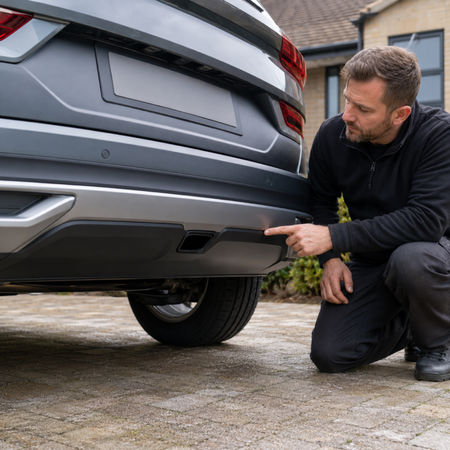
A detachable swan neck is one of the most popular choices for electric cars. The towball can be removed when it is not being used, helping to preserve the vehicle’s clean appearance.
Many detachable installations also include a socket plate that folds beneath the bumper, leaving very little of the towbar visible once the neck has been removed.
Benefits of a detachable swan neck towbar include:
- Almost invisible when the towball is removed
- Helps maintain the vehicle’s original appearance
- Compatible with most caravans and trailers
- Suitable for most towbar-mounted bike racks
- Less likely to interfere with parking sensors when removed
- Ideal for occasional towing or cycle-carrier use
For many EV owners, a detachable swan neck with dedicated 13-pin electrics provides the best balance of appearance, practicality and electronic compatibility.
Fixed swan neck towbars
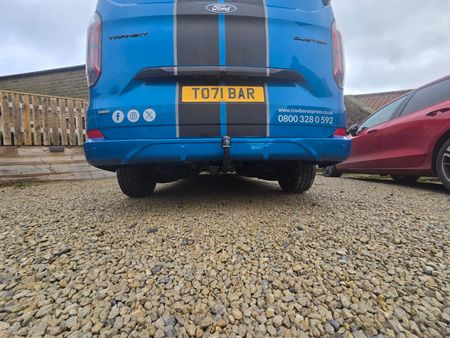
A fixed swan neck towbar is permanently attached to the vehicle. It offers a strong, simple and cost-effective solution for drivers who tow regularly or frequently use a towbar-mounted bike carrier.
Benefits of a fixed swan neck include:
- Always ready to use
- No detachable components to store
- Suitable for regular towing
- Compatible with most modern bike racks
- Slim design compared with a flange towbar
- Often less expensive than a detachable system
Because the towball remains fitted, drivers should check whether it may activate the vehicle’s rear parking sensors. Compatibility will depend on the towbar position and the sensitivity of the vehicle’s sensor system.
Fixed flange towbars
A fixed flange towbar uses a towball bolted to a visible faceplate. It is extremely practical and allows certain towing accessories to be fitted between the towbar and towball.
However, flange towbars are not available for every electric vehicle. They are generally more common on vans, commercial vehicles, 4x4s and larger SUVs.
A flange towbar may be suitable when:
- The vehicle is used for frequent or heavy-duty towing
- A bumper guard or additional towing accessory is required
- An AL-KO compatible towball needs to be installed
- The visible appearance of the towbar is not a concern
- The exact EV application has an approved flange system available
Why are dedicated electrics recommended for EVs?
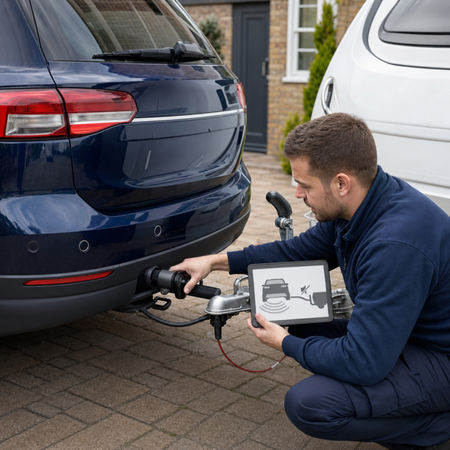
Modern electric vehicles use sophisticated electronic networks to control their lighting, parking sensors, braking systems and driver-assistance features. A dedicated electrical kit is designed specifically to communicate with these systems.
Depending on the vehicle, dedicated electrics may support:
- Trailer indicator monitoring
- Automatic rear fog-light control
- Parking sensor deactivation
- Trailer stability or anti-sway functions
- Changes to emergency braking sensitivity
- Blind-spot monitoring adjustments
- Reversing camera or rear sensor adjustments
- Recognition of a connected trailer or bike carrier
The exact functions vary between manufacturers and models. A dedicated kit cannot activate a function that the vehicle does not support, but it normally provides better integration than a basic universal wiring system.
Does an electric vehicle need towbar coding?
Some electric vehicles require coding or software configuration after dedicated towbar electrics have been fitted. This tells the vehicle that towing equipment has been installed and may allow supported trailer functions to operate correctly.
Coding requirements differ considerably between manufacturers. Some vehicles require coding, some automatically recognise the electrical module, and others offer only limited integration with an aftermarket installation.
Coding should always be checked for the exact vehicle rather than assumed from another model in the manufacturer’s range.
Will fitting a towbar affect an EV’s battery?
A correctly designed towbar does not connect to or modify the vehicle’s high-voltage battery system. The towbar is secured to approved structural mounting points, while its electrical kit normally operates through the vehicle’s low-voltage electrical system.
However, the position of the high-voltage battery and other EV components can affect towbar design and installation. This is why a towbar must be approved for the exact electric vehicle and fitted according to the manufacturer’s instructions.
Will towing reduce an electric vehicle’s range?
Yes. Towing increases the total weight and aerodynamic drag of the vehicle, which increases energy consumption and reduces driving range. The amount of reduction depends on:
- The weight of the trailer or caravan
- The shape and height of the trailer
- Driving speed
- Weather and wind conditions
- Road gradient
- Outside temperature
- Use of heating or air conditioning
A large caravan will normally have a greater effect on range than a low, lightweight trailer. Plan charging stops carefully and allow a comfortable reserve, particularly on unfamiliar journeys.
What should be checked before fitting an EV towbar?
Before ordering a towbar for an electric vehicle, confirm:
- The vehicle is approved for towing or carrying a bike rack
- The towing capacity shown by the vehicle manufacturer
- The maximum permitted nose weight
- The exact battery, motor and drivetrain version
- The towbar is type-approved for the vehicle
- The electrical kit is compatible with the vehicle
- Whether coding is required or supported
- Whether the towbar will be used for towing, bicycles or both
- The combined weight of the bike rack and bicycles
- Whether a visible or non-visible bumper cut is required
Which EV towbar system should I choose?
For most electric-car owners, a detachable swan neck towbar with dedicated 13-pin vehicle-specific electrics is the most versatile option. It provides a neat appearance, good compatibility with trailers and bike racks, and the best opportunity for integration with the vehicle’s electronic systems.
Drivers who tow regularly may prefer a fixed swan neck, while a flange towbar may be more suitable for certain commercial EVs and heavy-duty applications. If the vehicle is not approved to tow, a dedicated bike-carrier-only system may be available.
Professional EV towbar installation
At Towbar Express, we supply and install vehicle-specific towbar systems for a wide range of electric and hybrid vehicles. Our team checks the exact vehicle application, intended use, towing approval and electrical requirements before recommending a suitable system.
Whether you need a fixed, detachable or bike-carrier-only solution, we can help identify the most compatible towbar and electrical system for your electric vehicle.
Remember: the availability of a towbar does not automatically mean the vehicle is approved to tow. Always check the manufacturer’s towing capacity and use a type-approved system designed for the exact vehicle.